Your real site record
is a WhatsApp thread.
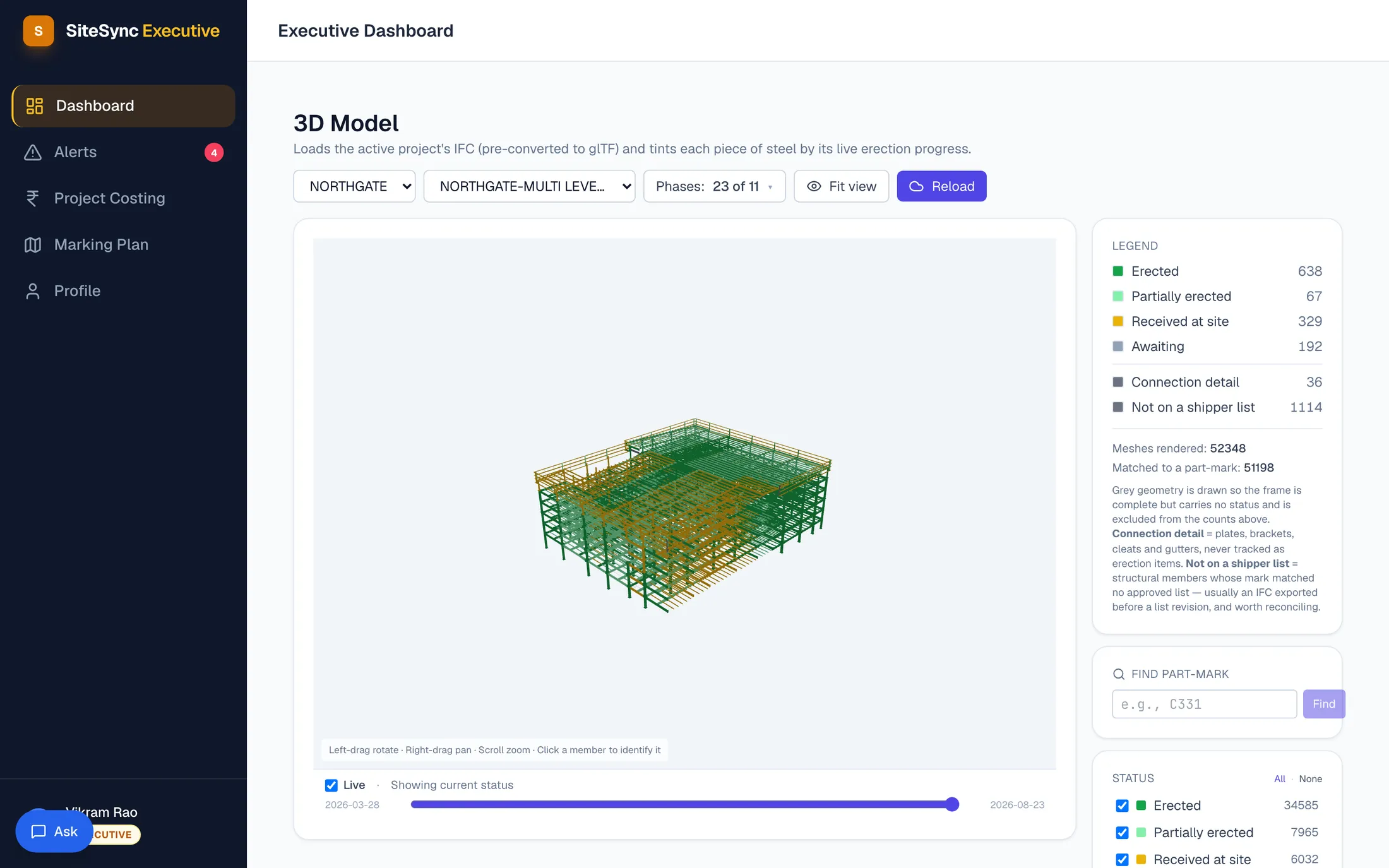
SiteSync is the other option. Every part mark, from the fabrication list to the erected member, with manpower, machinery, progress and cost against it. Change it once and every report, bill and KPI changes with it.
The approved shipper list, drawn. Grey is a mark that exists on paper and nowhere else.
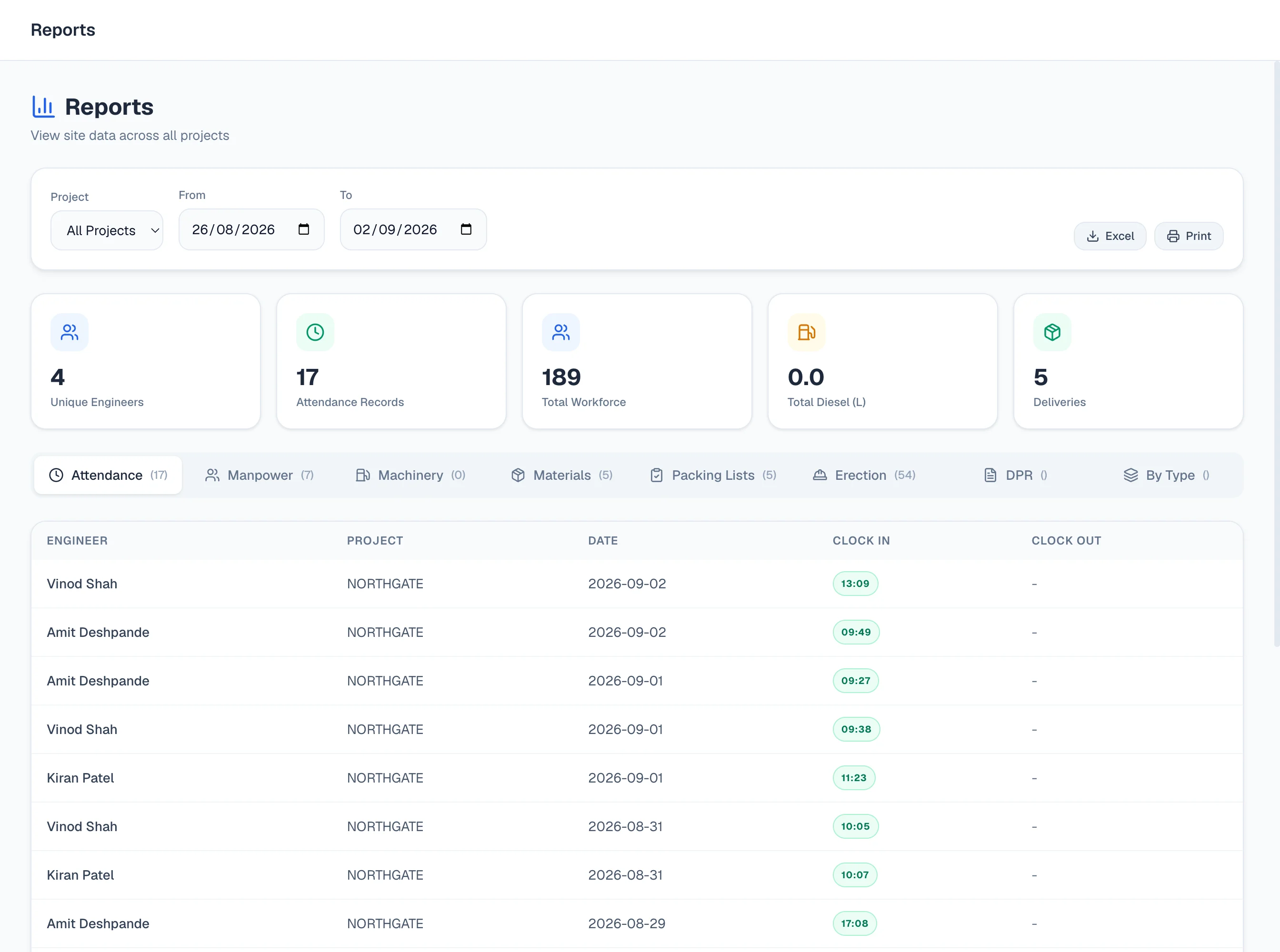
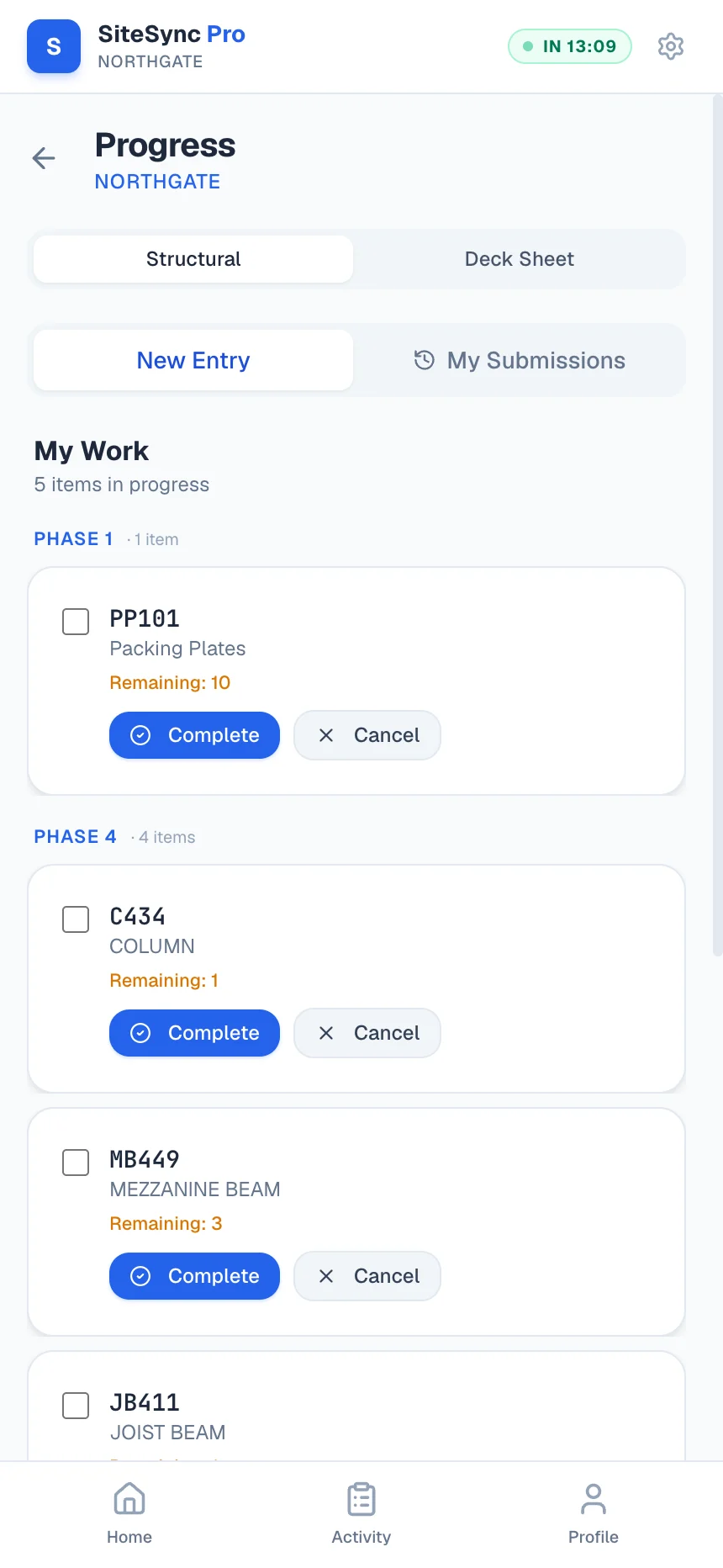
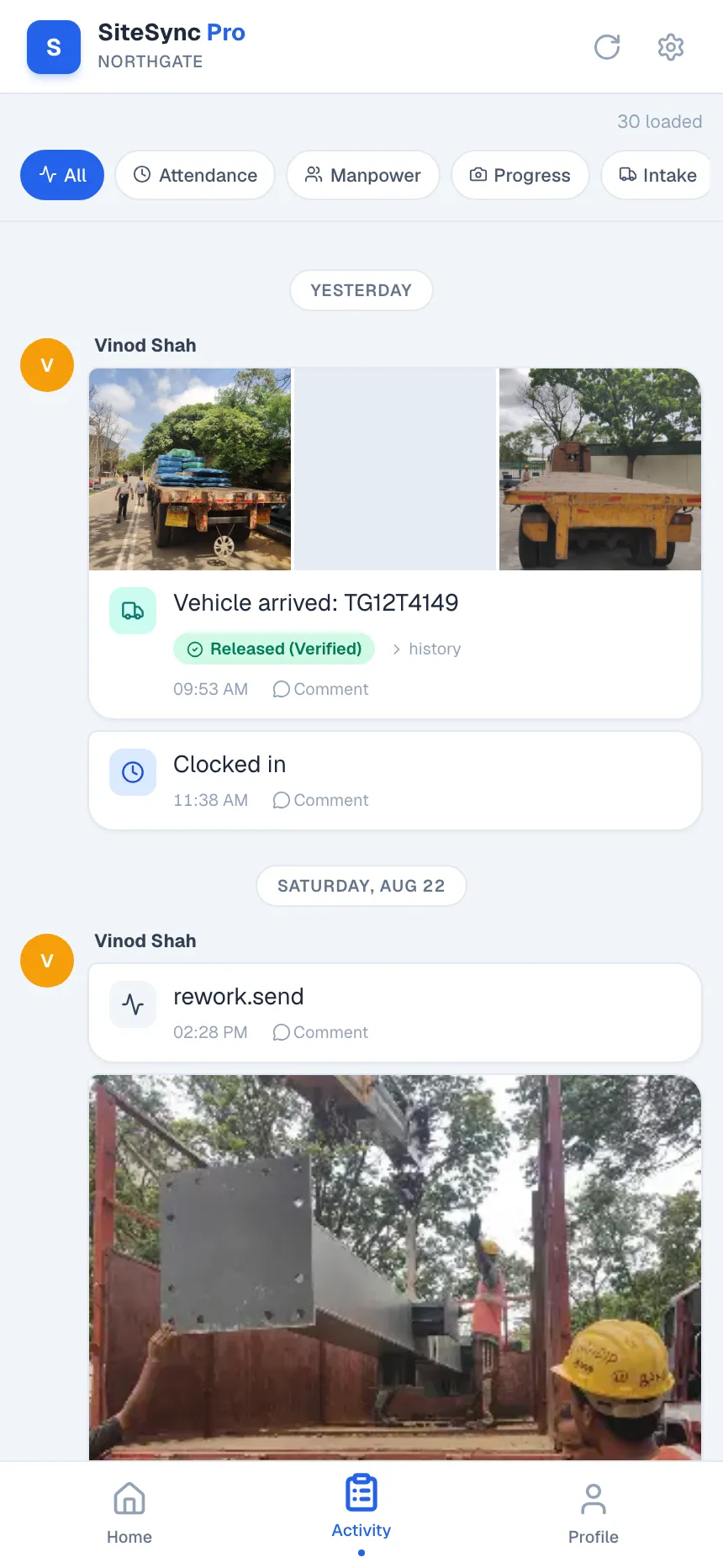
Logged on a phone at the point of the lift — crew, crane, hour meter, five stamped photos. Offline if the signal is gone.
The same record answers the DPR, the RA bill, cost per tonne and the marking plan. There is no second copy to update.
Every site already keeps a record. The question is whether anything downstream can read it.
Whatever reached the office by evening became the truth.
Approval is the moment work becomes real to every other screen.
Follow one part mark.
A vendor fabricates a phase's part marks; the floor packs and dispatches them. Every mark belongs to an approved shipper list, so what was ordered, made, dispatched and owed is one chain rather than four spreadsheets.
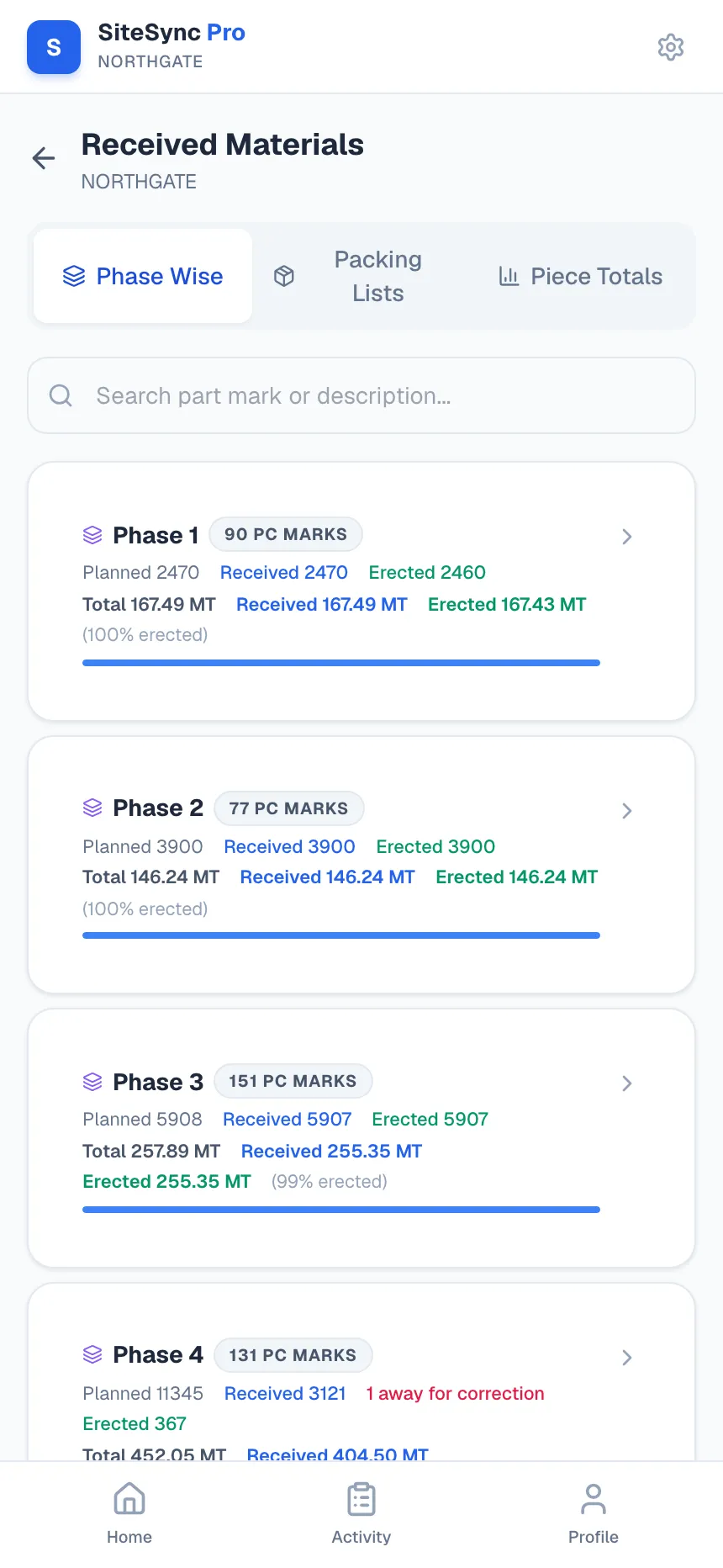
Every part mark in a phase sits in exactly one state. The floor reads its day off this stack rather than off a spreadsheet someone rebuilt last night.
The load is built against a real vehicle, so the weight it is carrying can be checked as marks are added rather than at the weighbridge.
The engineer keys the number plate. A photo of the loaded vehicle is required before anything else — the intake will not start without it.
Everything the engineer has started and not finished, oldest first. Anything sitting over 24 hours is pulled to the top and flagged.
A PM sees only submissions on their own projects. The queue is live — another PM approving in the same project updates this one without a refresh.
Nothing downstream is typed twice.
The DPR, the bill and the cost sheet used to be rebuilt by hand from the same evening's notes. They are all views of the approved record.
Because there is no second copy to update. Correct a reading on the phone at 4pm and the bill, the KPI and the marking plan already agree.
- Site log → approved record
- under 1 h · median
- Bad entries stopped at capture
- 20 · first 3 weeks
- Double-counted steel suppressed
- 42.36 MT
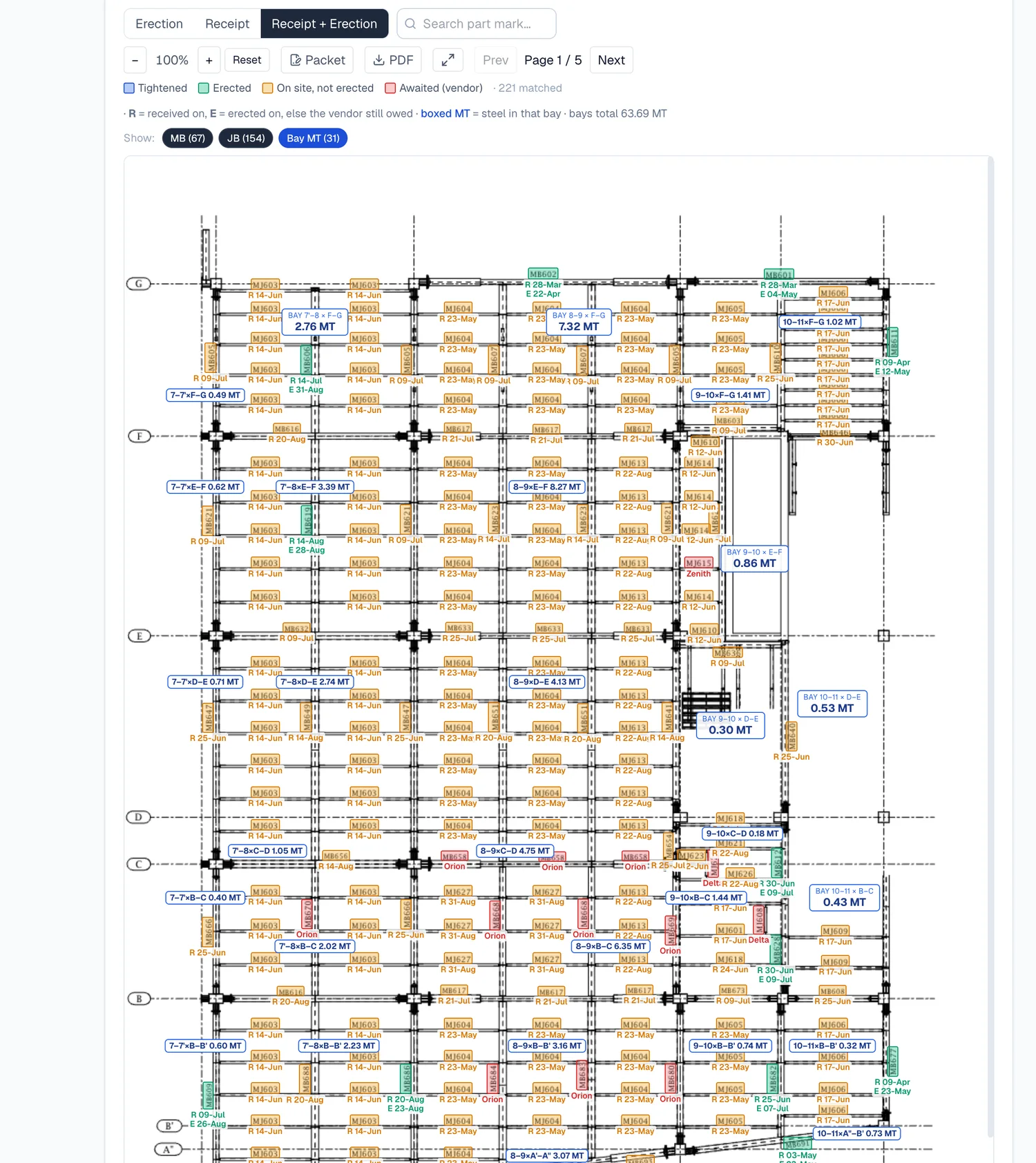
Ask for a mark. Or find it on the drawing.
Two ways into the same record — a question box on every screen, and your own GFC drawing coloured by what the site reported.
Ask it something
Illustrative figures, in the shape the app returns. The measured numbers are further down, under their claim IDs.
MB601 is a Phase 4 mark against Fabricator 2. Of 48 ordered, 41 have been received and 33 are up; 2 went back to the fabrication unit for correction.1
It arrived across three deliveries and has gone up on three days.1
| Ordered | 48 |
|---|---|
| Unit weight | 212.40 kg |
| Total weight | 10,195.20 kg · 10.20 MT |
| Received | 41· 7 to come |
| At the factory | 2· sent back for correction |
| Erected | 33· 8 to go up |
Drawn straight from the data, not through the model.
What stops it making things upEvery figure is checked against the rows that answer actually read, and anything untraceable is flagged. An answer that read nothing and states a fact is withheld outright — which is what happens above. The citations come from that same check, so one cannot name a source that did not verify the number beside it.
Seven people, one chain of custody.
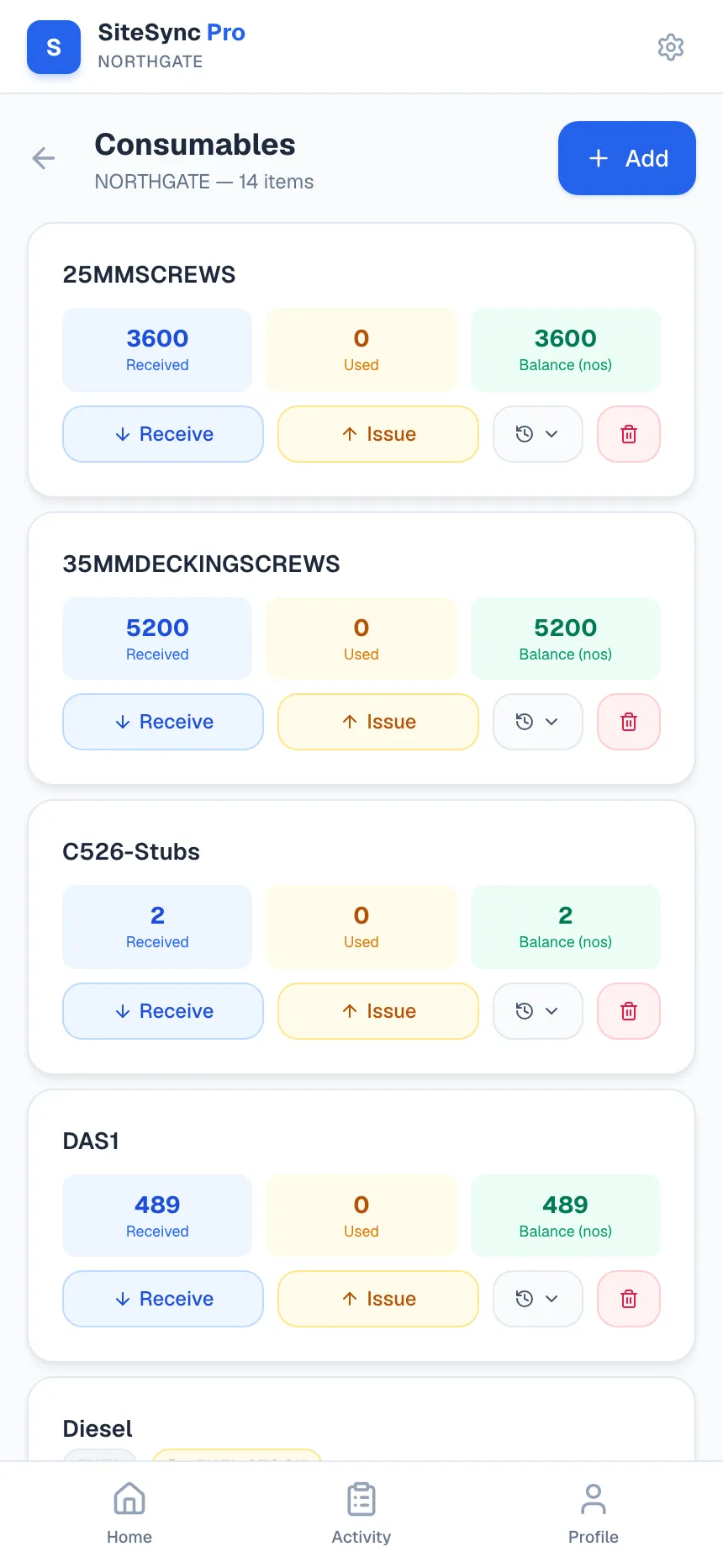
Each role sees only its own work — and hands the next one a record it does not have to retype. Twenty-seven screens across five roles.
Measured, not estimated.
Every figure is counted out of the production database by a monthly job, and every one of them can be recounted. One live project. Twelve users. Everything above is from that project. Figures as on 20 August 2026.
"Where is this mark, and is it up yet?" was often unanswerable without walking the site. It is now a search.
Stated plainly, because a product that claims everything is believed on nothing.
Your data is isolated at the database, not by a filter in the app — RLS on all application tables; privileged database routines are individually access-gated. Company isolation runs in two independent layers, failing closed, over an append-only hash-chained audit log. No passwords stored or transmitted.
- It does not do detailing, design, or fabrication drawings.
- It does not replace the ERP or accounting system; it feeds them better inputs.
- It does not remove the need for a competent site engineer — it removes the re-keying, the reconciliation, and the arguing about what happened.
- Offline capture still requires the engineer to open the app. It is a system of record, not a sensor network.
Half an hour, your own drawings, and an honest answer about whether it fits.
Leave a work email and we will come to you. No deck.